Skip permit requirements in Islington council for rubbish removal
Posted on 18/08/2026

If you are arranging waste clearance in Islington, the skip permit question tends to appear sooner than people expect. One minute you are clearing a flat, a garden, or a small renovation mess; the next you are staring at a skipped driveway, a narrow street, and the awkward reality that a skip on a public road may need permission. Skip permit requirements in Islington council for rubbish removal are not just a box-ticking exercise. They affect timing, cost, access, safety, and whether your job runs smoothly or turns into a headache by lunch time.
This guide explains what the permit rules mean in plain English, when you need one, when you usually do not, and how to avoid the common mistakes that catch people out. If you are comparing rubbish removal options, planning a flat clearance, or weighing up whether a skip is even the best idea for your property, you will find the practical stuff here. And yes, there is a sensible way to do this without overcomplicating it.
Why skip permit requirements in Islington council for rubbish removal matters
Let's face it: most people do not think about permits until a skip is already on the shortlist. But in a busy borough like Islington, the location of the skip matters almost as much as the waste itself. If the container sits on a public road, parking bay, or other shared highway space, permission is often involved. That can affect your start date, your budget, and how much room you have left for delivery vehicles, neighbours, and passing traffic.
There is also a bigger reason this matters. A skipped job that is planned badly can create avoidable friction with the council, the skip provider, or your neighbours. In practice, that can mean delay, extra cost, or having to move the skip at short notice. Not exactly the calm, tidy weekend you had in mind. For jobs in dense streets, basement flats, and narrow terraces, the permit question is often the difference between a clean solution and a messy one.
In Islington, where roads can be tight and access is often awkward, the permit issue is especially relevant for anyone clearing builders' rubble, old furniture, or mixed household waste. If you want a broader sense of how waste services are usually structured locally, the services overview is a useful starting point. It helps you compare the moving parts before you commit to one method.
Key takeaway: if your skip will sit on public highway space, permit planning is not optional. It is part of the job, not an afterthought.
How skip permit requirements in Islington council for rubbish removal works
The basic rule is straightforward. If the skip is placed on private land, such as a driveway, forecourt, or enclosed site, a council permit is usually not needed. If the skip is placed on a public road or in a space controlled by the highway authority, a permit is usually required. Simple on paper. Slightly less simple when the street outside your property is narrow, parked-up, or shared with several flats. Which, in Islington, is hardly rare.
In most cases, the skip provider arranges the permit process, or at least advises on it. That matters because the provider will know the container size, the delivery route, and the likely placement issues. If you are organising the skip yourself, you need to make sure the application is done in time and that the skip will be in a safe, lawful position. No one wants a lorry arriving before the paperwork is sorted. That is how jobs stall before they begin.
The process typically involves confirming the location, size, and duration of the skip, then checking whether any extra traffic management or parking controls apply. For example, a bay suspension, loading restriction, or access issue may affect the plan. This is where local knowledge matters. A skip might be legal in one side street and a nightmare in another.
It is also worth noting that not every waste job needs a skip. For smaller loads, same-day collections or a man-and-van style removal can sometimes be easier. If you are unsure whether your waste volume justifies a skip, have a look at waste collection in Islington before deciding. A shorter, quicker collection can save you the whole permit question.
Key benefits and practical advantages
Getting the permit side right gives you more than legal peace of mind. It makes the whole rubbish removal job smoother. You avoid last-minute changes, reduce the risk of blocked access, and give yourself a predictable window for clearing out the waste. That sounds boring until you are the person trying to shift broken cabinets out of a hallway while a skip lorry is waiting outside. Then it sounds brilliant.
- Less disruption: proper planning means fewer delays on the day.
- Lower risk of penalties: no accidental placement on the highway without permission.
- Cleaner logistics: the skip size, delivery access, and placement are sorted in advance.
- Better for neighbours: less chance of complaints about blocked access or unsafe positioning.
- More control over cost: permit-related charges are easier to budget for when you know them upfront.
There is another benefit people overlook. Planning the permit properly encourages you to think harder about the type of waste you are clearing. Builders' waste, garden waste, furniture, and mixed household rubbish all behave differently in a skip. Some items are compact but heavy. Others are bulky but light. The better you understand the load, the less likely you are to oversize or undersize the container.
If you are clearing renovation debris, the dedicated builders waste disposal in Islington page is helpful for understanding what kind of job is often better handled through a specialised collection rather than a simple general skip.
Who this is for and when it makes sense
This topic is for more people than you might think. Homeowners renovating a kitchen, landlords turning over a rental, office managers clearing out old stock, and residents emptying a flat after a move all run into the same question. Where will the waste go, and does the container need permission to sit there?
Skip permit requirements in Islington council for rubbish removal matter most when:
- you do not have a driveway or private forecourt;
- the road outside your property is narrow or heavily parked;
- you live in a flat with shared access;
- you are working to a tight turnaround, such as before a sale or tenancy change;
- you have bulky waste that cannot be broken down easily;
- you expect more waste than a standard household bin collection can take.
For some jobs, a skip is still the best answer. For others, it is overkill. A quick furniture clearance, for example, may be better handled by a focused removal service rather than a skip sitting outside for days. If that sounds familiar, the furniture disposal in Islington service may be the more practical route.
Truth be told, a lot of people only want one thing: the mess gone, without a week of admin. Fair enough. If that is your situation, the permit question is not just a technicality; it is a decision point.
Step-by-step guidance
If you want to approach this calmly, follow a simple sequence. It will save you back-and-forth later, and likely a couple of sighs too.
- Check where the skip will sit. Private land usually means fewer formalities. Public highway space usually means a permit is needed.
- Estimate the waste type and volume. Knowing whether the load is light, mixed, or heavy helps with container choice.
- Look at access conditions. Can a lorry stop safely? Is there enough turning space? Are there low trees, railings, or parked cars in the way?
- Confirm timing. Permit arrangements can take time, so do not leave it until the morning you need the skip.
- Ask who is responsible for the permit. Some providers handle the process. Others expect you to coordinate it.
- Check whether a skip is actually the best method. Smaller clearances may be more efficient through another removal approach.
- Plan loading carefully. Put the heavier waste in first and keep prohibited items out of the container.
If your job includes a household clear-out, the house clearance in Islington page is a useful companion read because it shows how larger clearances often need a more tailored approach than a generic skip order.
One small but important detail: if you are working around a move-out deadline, build in a buffer. Life has a way of being slightly less organised than the booking form suggests. The skip arrives, the lift breaks, the hallway is narrower than remembered, and suddenly everything takes longer.
Expert tips for better results
A few small decisions can make the difference between a smooth job and a grumbly one. Here is what tends to help most in real-world Islington jobs.
- Choose the right waste method first. Do not default to a skip just because it is familiar.
- Measure the space properly. A skip that technically fits can still create access issues.
- Avoid peak friction points. School run times, bin day congestion, and resident parking chaos can all complicate delivery.
- Keep neighbours in mind. A short courtesy notice can reduce complaints if the skip will be nearby for a while.
- Ask about loading restrictions. Some waste streams need special handling, and not everything should go in the skip.
- Get the permit and collection timing aligned. A permit that starts too late, or a skip that arrives before approval, can create a useless waiting game.
For jobs where access is difficult or the property is on a tight street, a quick read of flat access problems for Islington rubbish collection jobs can be eye-opening. It explains why access planning matters so much in this part of London, even for relatively small loads.
And if you are trying to avoid surprise costs, the guide to avoiding hidden rubbish removal charges in Islington is worth a look. Permit issues are often part of the hidden-cost story, whether people realise it or not.
Common mistakes to avoid
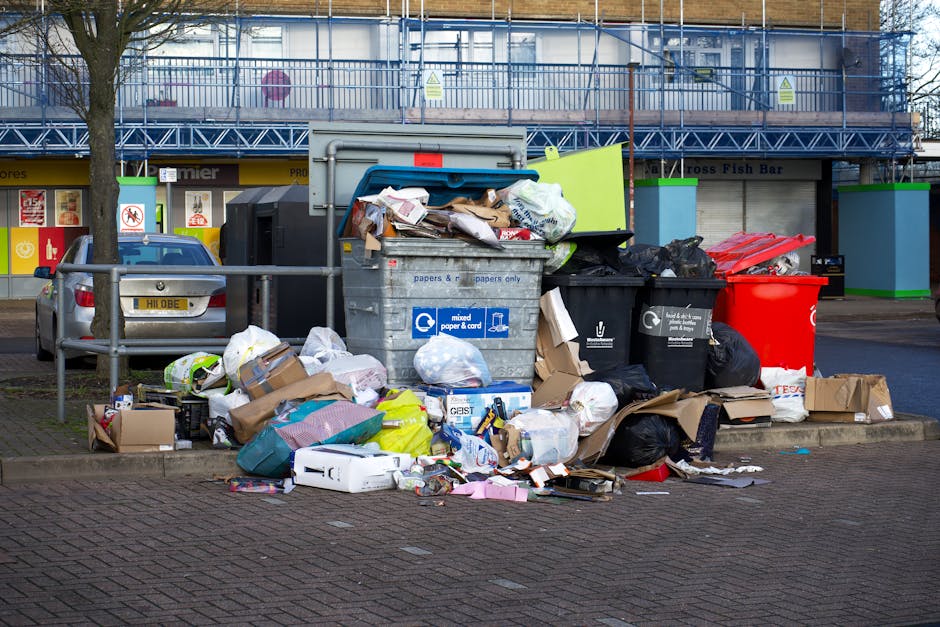
The most common mistake is assuming the skip can just be placed anywhere for a few days. That can go wrong fast. Another common one is underestimating how long the job will take. What starts as a quick declutter can turn into a half-day sorting exercise once you find old boxes, broken shelving, and a mystery chair you forgot you owned.
- Leaving permit checks too late: this is the classic delay-maker.
- Choosing the wrong container size: too small means extra collections; too big means wasted money.
- Ignoring access limits: tight corners and parked cars can stop the delivery altogether.
- Mixing prohibited items in with general waste: this can create compliance and safety problems.
- Not planning for loading time: especially in flats or houses without easy ground-floor access.
Booking mistakes are also a hidden culprit. A rushed appointment, unclear instructions, or not mentioning access restrictions can all raise the final cost. There is a helpful breakdown in booking mistakes that raise Islington rubbish removal costs, and it is exactly the kind of practical guidance people wish they had read first.
If your street is particularly busy or awkward, delay is not a surprise; it is almost part of the landscape. That is why same-day hopes should always come with a reality check, especially in central and inner-London areas.
Tools, resources and recommendations
You do not need a giant toolkit to handle this well, but a few basics help. A tape measure, a notepad or phone notes app, a rough waste inventory, and a couple of photos of the access point can save time later. Photos are especially useful if you are dealing with shared entrances, a narrow mews, or a street with awkward parking. A quick photo at 8am can tell a more honest story than your memory will at 4pm.
Useful things to prepare before booking include:
- a rough list of waste items;
- approximate volume or number of rooms being cleared;
- photos of where the skip would go;
- notes on parking restrictions or limited access;
- timing constraints, such as tenancy changeovers or renovation deadlines;
- any special handling concerns, especially for heavy or awkward materials.
If sustainability matters to you, it often should, then it is worth checking how waste is sorted and handled. The page on recycling and sustainability gives you a sense of the responsible disposal angle, which is increasingly important for many households and businesses.
For clear, upfront commercial information, the pricing and quotes page is also useful. A proper quote should reflect access, waste type, timing, and the likely permit situation rather than hiding those details in the fine print.
Law, compliance, standards, or best practice
When skip permit requirements in Islington council for rubbish removal are involved, the legal principle is simple even if the operational details are a bit fussy: do not place a skip on public highway space without the required permission. In the UK, waste duty-of-care principles also mean waste should be managed responsibly, handled by suitable parties, and not dumped or stored in unsafe ways. That is the broad standard, and it is sensible to treat it seriously.
Best practice also goes beyond the permit itself. A responsible provider should be able to explain access issues clearly, manage the booking carefully, and give you enough detail to understand what happens next. On the customer side, the sensible approach is to be accurate about what you need. Guessing low on the waste volume, or pretending access is easier than it really is, usually comes back around in the form of delay.
If you want a more general picture of service standards and what to expect from a professional operator, the insurance and safety page is a good read. It helps set expectations around risk management, vehicle safety, and general responsibility.
For anyone keen to understand the broader company approach, the about us page and the terms and conditions page can also be useful. Not glamorous, granted, but useful. Especially when you want to know where responsibilities sit.
Options, methods, or comparison table
Sometimes the skip is the right answer. Sometimes it is not. The table below gives a simple comparison to help you decide without overthinking it.
| Option | Best for | Permit likely needed? | Main advantage | Main drawback |
|---|---|---|---|---|
| Skip on private land | Homes with driveways, forecourts, or private sites | No, usually | Simple and efficient | Needs enough space |
| Skip on public road | Terraces, flats, or homes without private space | Yes, usually | Handles larger volumes | Permit and placement planning |
| Man-and-van style collection | Smaller or mixed waste loads | No | Often quicker and less hassle | Less suitable for major clearances |
| Specialist clearance service | Furniture, office waste, or house clearances | No | Less admin, more tailored handling | May not suit loose rubble in large quantities |
If you are dealing with workplace waste, the office clearance in Islington page may be more relevant than a skip hire route, especially where desks, fixtures, and mixed items need careful removal rather than simple container loading.
In a similar way, smaller domestic jobs can sometimes be handled through a direct collection instead of skip placement. For many residents, that is the difference between a morning of admin and a surprisingly calm afternoon.
Case study or real-world example
Picture a typical Islington flat clearance on a Friday. The tenant is moving out on Monday, the lift is small, and there is a pile of old furniture, broken shelving, packaging, and a few bags of mixed clutter gathered over years. The first instinct is often, "We need a skip." But the street is busy, there is limited parking, and the only available spot is on the public road. That means a permit is likely part of the plan.
Now imagine the same job with a more measured approach. The access photos are checked first. The waste is split into items that can be taken by a clearance team and items that really need a larger container. The booking is timed around the access window. Suddenly the job becomes much cleaner. Fewer surprises. Less waiting around. No one is standing in the hallway holding a lamp and wondering why the lorry has not arrived yet.
That is the real lesson here. Skip permit requirements are not just about the council. They are about shaping the job so it actually works in the real world. In a city flat, the theory and the reality are rarely the same thing, and that is fine. You just need to plan for the reality.
Practical checklist
Use this before you book anything.
- Confirm whether the skip will be on private land or public highway space.
- Measure the available area and note any tight turns or height restrictions.
- Estimate the type and amount of waste.
- Check whether the job is better handled by a skip or a direct collection.
- Ask who arranges the permit and how long it may take.
- Take photos of the access point and the intended placement area.
- Check for parking controls, loading restrictions, or busy street timings.
- Make sure everyone involved knows the collection or delivery window.
- Keep prohibited items out of the waste load.
- Build in a small time buffer in case of access delays.
If you want to compare all the moving parts before deciding, the guide to Islington Council rubbish disposal rules and fines is a useful companion piece. It gives extra context on why compliance matters and what tends to go wrong when people rush the process.
Get a free quote today and see how much you can save.
Conclusion
Skip permit requirements in Islington council for rubbish removal can feel fiddly at first, but once you break them down, they are mostly about location, timing, and common sense. If the skip goes on public highway space, plan for permission. If it stays on private land, things are usually easier. The trick is not to guess. Check the access, think through the waste type, and choose the method that fits the property rather than forcing the property to fit the method.
In a borough like Islington, where streets are busy and space is precious, good planning pays off quickly. You save time, avoid stress, and keep the job moving. That is the whole point, really. Clear the waste, keep the neighbours happy, and get your space back without drama. A tidy finish always feels better than a rushed one.
 Tipper Van - Rubbish Removal and Waste Collection Prices in Islington, N1
 Luton Van - Rubbish Removal and Waste Collection Prices in Islington, N1


